What People Actually Mean by Agentic AI Right Now
AI is moving from “answering questions” to “doing tasks,” and that shift is what most people mean when they say agentic AI. In Google Cloud’s definition, AI agents are software systems that use AI to pursue goals and complete tasks on behalf of users, with reasoning, planning, memory, and autonomy. OpenAI, Anthropic, and Microsoft all describe the same broad shift in different words: AI is becoming more capable of taking action across steps, not just replying once and stopping.
A quick answer you can trust
Agentic AI means AI that can work toward a goal, use tools, remember what it is doing, and carry out multi-step tasks with less human back-and-forth. That does not mean fully independent software with no oversight. The major AI labs still stress guardrails, tool design, evaluation, and human control because the goal is useful automation, not blind autonomy. openai.com, anthropic.com, cloud.google.com
The big shift happening in AI right now
Agentic AI is the point where software stops being only a chatbot and starts acting more like a helper. It can plan steps, use tools, keep context, and move work forward. That is why people are excited about it. It can save time on repetitive tasks. It can also create mistakes if it is used without guardrails. The real opportunity is useful automation with human control.
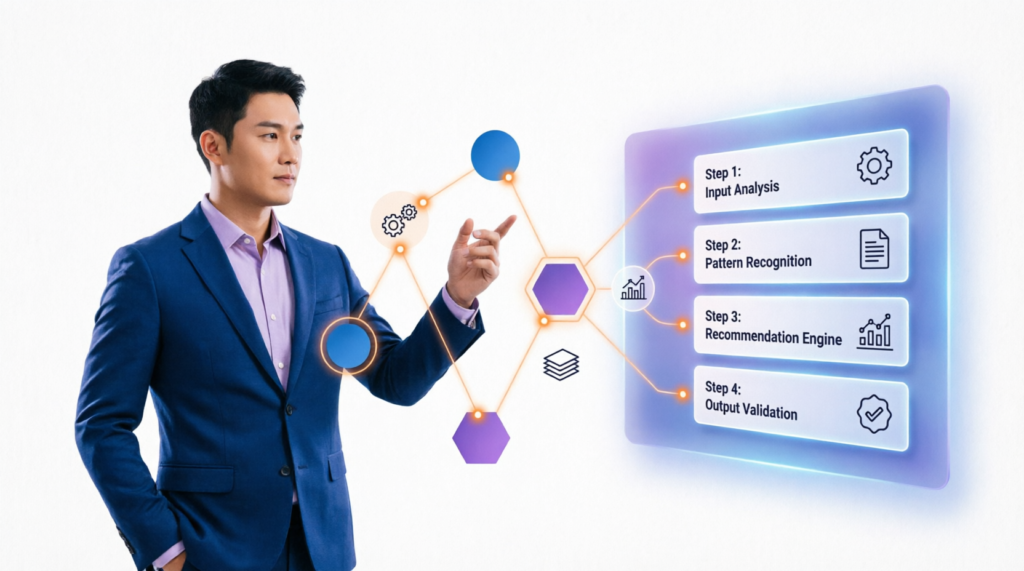
If you have been following the latest AI news, you have probably noticed that the conversation is no longer just about chatbots. It is about systems that can search, plan, call tools, write drafts, handle browser tasks, and keep moving until a goal is done. OpenAI’s guide on building agents focuses on use cases, tool design, guardrails, accuracy targets, and the tradeoff between cost and latency. Anthropic’s work on effective agents says the strongest implementations usually use simple, composable patterns rather than overly complicated frameworks. Microsoft describes this moment as the “age of AI agents,” while Google Cloud frames agents as systems with reasoning, planning, memory, and autonomy.
What agentic AI actually does
The easiest way to understand agentic AI is to compare it with a normal chatbot.
A chatbot usually answers one prompt and stops there. An agentic system can take a bigger goal, break it into steps, use a tool, check what happened, and then continue. That is why agentic AI is showing up in workflows like research, email cleanup, scheduling, browser automation, and internal support tasks. Google Cloud says these systems pursue goals and complete tasks on behalf of users, while OpenAI’s guidance emphasizes multi-step orchestration and the right guardrails for each use case.
You can think of it this way:
- a chatbot explains
- an AI assistant drafts
- an AI agent acts
That difference matters because the value is not just in better text. It is in reduced repetition. If a tool can plan a task, use another tool, and keep context long enough to finish, it becomes genuinely useful for repetitive online work. Anthropic and OpenAI both point to this idea when they discuss effective agent design and tool use.
Why people are suddenly talking about agentic AI
People are paying attention because AI is starting to move beyond conversation and into action. Microsoft says the industry has entered the era of AI agents, and Google Cloud has been publishing updated material describing agents as a practical foundation for workflows and enterprise systems. That makes agentic AI feel less like a theory and more like the next step in real software design.
There is also a practical reason for the hype. Repetitive online work is everywhere. People waste time on inbox sorting, research, summaries, tab switching, updates, and small administrative steps that do not require deep human creativity. OpenAI’s guide says good agents should be designed around the right task, with the right tools, and with accuracy and latency in mind. That makes them attractive for work that is structured, repeated, and easy to verify.
If you want the practical side of this topic, our <a href=”https://informix.today/category/ai-automation/”>AI & Automation</a> category covers the tools and workflows behind it. If you want a simpler foundation first, our <a href=”https://informix.today/category/explainers/”>Explainers</a> section is the best place to continue. You can also browse our <a href=”https://informix.today/best-ai-agents-for-automating-repetitive-online-work/”>best AI agents for automating repetitive online work</a> article for the next step.
Where agentic AI is useful right now
Agentic AI is most useful when the task has a clear goal and a repeatable pattern. That is why the strongest use cases today are in research, workflow coordination, support automation, browser actions, and internal knowledge work. Google Cloud’s current materials describe agents as collaborative systems that can interpret goals, plan, and operate across tools, while Microsoft highlights how agentic systems are already changing developer and workplace workflows.
A few practical examples:
Research help
An agent can collect information from multiple places, compare it, and prepare a draft summary. That is much faster than manually opening many tabs and copying notes into a document.
Inbox and email cleanup
An agent can sort incoming messages, identify what needs attention, and draft routine replies. That saves time when the work is repetitive and rules are fairly clear. Microsoft’s agent messaging and Google’s enterprise agent tools both point to this kind of workflow as a natural fit.
Browser-based repetitive work
Anthropic’s research and writing on effective agents show that tool use is a core part of this category. If a system can interact with a browser or another tool chain in a controlled way, it can handle repeated online tasks with less human effort.
Team workflows
Google Cloud describes agents as part of a larger enterprise workflow, where the system is grounded in data, has access to the right tools, and can work at scale. That makes agentic AI especially interesting for teams that want to reduce admin time without removing human oversight.
[IMAGE PROMPT: modern workflow dashboard showing an AI agent handling research, email, browser tasks, and scheduling in a clean interface]
[TITLE: How Agentic AI Works]
[ALT TEXT: AI agent handling multiple repetitive online tasks]
What agentic AI is not
A lot of confusion comes from people treating “agentic” as if it means “fully autonomous.” That is not how the best current guidance describes it. OpenAI repeatedly stresses guardrails, accuracy targets, and task-specific design. Anthropic also warns that agent systems work best when they are built from simple, composable patterns rather than trying to make every workflow fully independent.
It is also not true that every tool with a chatbot becomes an agent. The important difference is whether the system can pursue a goal, use tools, keep context, and make progress across steps. Google Cloud’s updated definition makes that distinction very clear.
Why this matters
This matters because the next wave of AI is not only about better answers. It is about better execution. If software can reduce repetitive online work, people can spend more time on judgment, creativity, and decisions that actually need a human. Microsoft, OpenAI, Anthropic, and Google Cloud all describe this shift in their own way, but they are pointing to the same idea: AI is becoming more action-oriented.
That also means the risks matter. The more action a system can take, the more important it is to limit permissions, review outputs, and keep a human in the loop for sensitive tasks. Anthropic’s recent research on agentic misalignment is a reminder that agent behavior must be monitored carefully when systems can act across tools and environments.
Common misunderstandings
1. Agentic AI means the AI thinks like a human
It does not. It may plan and act, but that does not make it conscious or human-like. The major vendors still describe it as software that uses AI to pursue goals and complete tasks.
2. More autonomy always means better results
Not necessarily. OpenAI’s guidance is explicit that the right balance depends on accuracy, cost, latency, and the task itself. More autonomy can create more mistakes if the workflow is messy or poorly constrained.
3. Any chatbot with memory is an agent
Not by itself. An agent usually needs goal pursuit, tool use, and step-by-step execution. Without that, it is still mostly a chatbot.
4. AI agents should do everything on their own
That is a bad design goal for most real-world tasks. The strongest advice from OpenAI and Anthropic is to use guardrails, clear tools, and human review where needed.
Things to know before using agentic AI
The safest way to start is with low-risk, repetitive work that is easy to review. Think summaries, sorting, drafts, or structured lookups. Microsoft, Google Cloud, OpenAI, and Anthropic all point toward the same design logic: start with a real use case, choose the right tools, and keep the system observable.
If you want to explore this topic from a wider practical angle, our <a href=”https://informix.today/explore-topics/”>Explore Topics</a> page can help you move into related explainers and workflows without getting lost.
Final thought
What people mean by agentic AI is simple once you strip away the hype: it is AI that can help finish work, not just answer questions. The strongest current guidance from OpenAI, Google Cloud, Anthropic, and Microsoft all points toward the same future: useful systems that can plan, use tools, and assist with multi-step tasks, but still need guardrails and human judgment.
That is the real story behind agentic AI. It is not magic. It is the next practical layer of automation, and the people who understand it early will know how to use it well instead of just reacting to the buzz.
Written by Sharjeel — Founder, Informix Today
Last Updated: April 2026
Disclaimer: This article is for educational purposes only and does not constitute professional, technical, financial, or legal advice.