How to Turn a Windowsill into a Productive Grocery Shelf
You don’t need a backyard or a green thumb to fight back against rising grocery prices. A sunny windowsill, a handful of cheap containers, and scraps you’d otherwise throw away are enough to keep a steady trickle of fresh produce coming into your kitchen.
This guide walks through nine everyday foods — from regrown green onions to a full ginger patch — that genuinely thrive on a windowsill, with realistic timelines and the mistakes that trip most beginners up.
❓ The problem: Grocery prices keep climbing, and fresh produce is one of the first things to get cut from a tight weekly budget.
👪 Who this helps: Anyone with a sunny windowsill — no backyard, greenhouse, or gardening experience required.
✅ What you’ll learn: How to regrow scraps you already have (green onions, celery, romaine), which seeds actually work in small containers (lettuce, radishes, herbs), and which heavier crops (garlic greens, bush beans, ginger) are worth the extra patience.
💰 What you’ll save: Roughly $15–$25 a month from just green onions and one lettuce container — potentially $200+ a year once herbs and root crops are added.
🛠️ Your next step: Save the root end of your next bunch of green onions and set it in an inch of water on your sunniest windowsill tonight.
📅 Do this now: Every vegetable scrap you compost or regrow instead of tossing is money you don’t have to spend at the store next week.
Regrowing Scraps You Already Have
The cheapest way to start costs nothing at all. A surprising number of vegetables can regenerate from the part most people throw away — the root base. Set that base in shallow water instead of the trash, and it starts producing new, edible growth within days.
1. Green onions
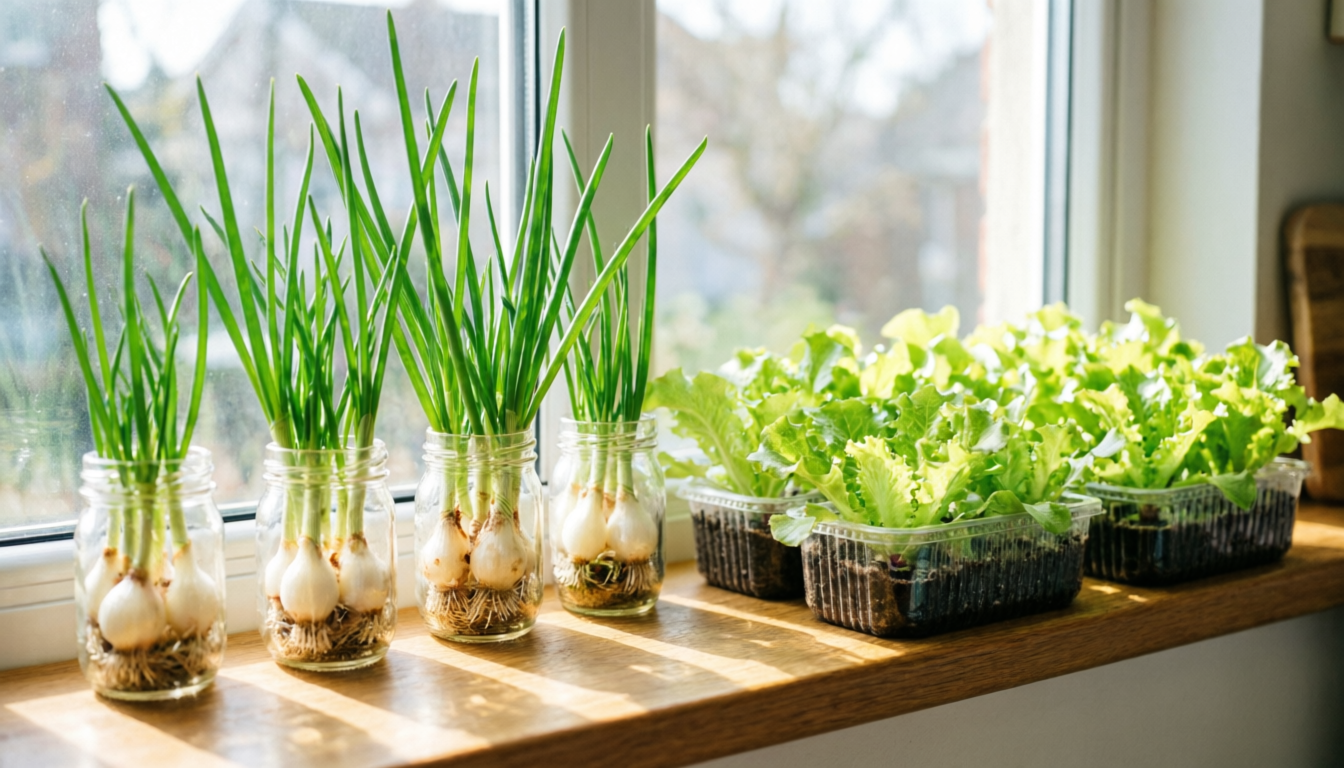
These are the easiest win in windowsill gardening. Use the green tops for cooking as usual, then save the white root end. Stand it root-down in about an inch of water in a small jar, on a sunny sill, and swap the water every couple of days to keep it fresh. New green shoots typically appear within about a week, and you can keep clipping and regrowing from the same base for several rounds before it needs to go into soil.
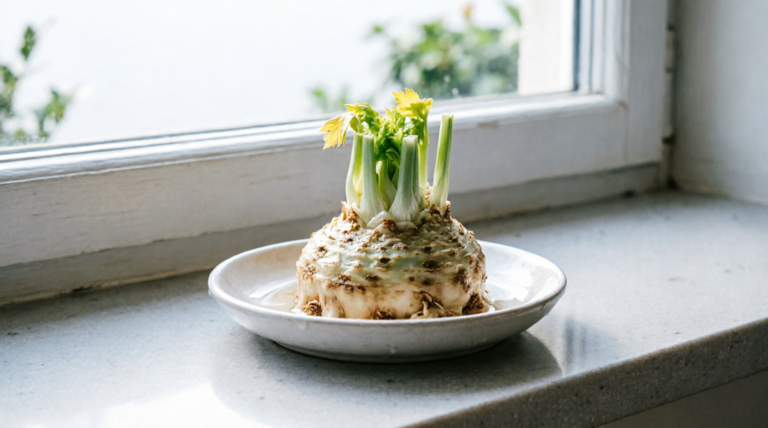
2. Celery from the base
Slice about two inches off the bottom of a celery head and set it cut-side up in a shallow bowl of water. Within a week, small yellow-green leaves start pushing up from the center, along with new roots underneath. Once roots establish, transplant the base into a small pot of soil for an ongoing supply of celery leaves for soups and salads.
3. Romaine lettuce hearts
Save the stump at the base of a romaine head and set it in a shallow dish of water, the same way as celery. New leaves push up from the center within days. It won’t regrow into a full head, but it’s a reliable source of crisp leaves for sandwiches — and it means fewer bags of pre-washed lettuce rotting in the crisper drawer.
Growing From Seed in Recycled Containers
Beyond regrowing scraps, small seeds and reused packaging can produce a genuinely larger harvest — it just takes a few extra weeks to get going.
4. Cut-and-come-again lettuce
Take a clear plastic clamshell from berries or greens, poke a few drainage holes in the bottom, and fill it with potting soil. Scatter loose-leaf lettuce seed across the surface, cover lightly, and keep it misted. Once leaves reach about four inches, cut them an inch above the soil — the plant regrows, and a single planting can typically be harvested three or four times.
5. Radishes
Radishes are about as fast as vegetables get. Because the edible part forms underground and doesn’t need deep soil, they do well in shallow window planters. Seeds sprout in around three days, with mature radishes ready in under a month. The green tops are edible too, and work well cooked or tossed into a stir-fry.
6. Windowsill herbs
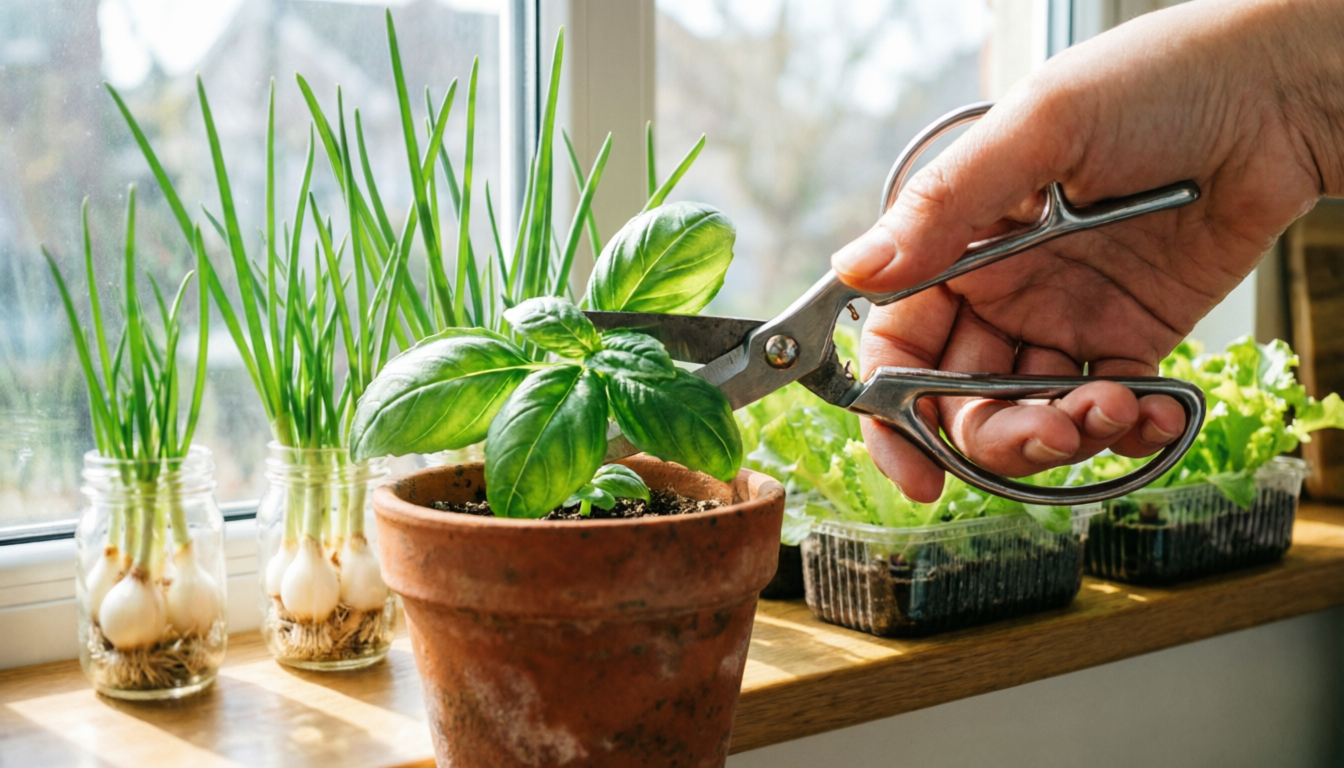
Basil, cilantro, and mint are some of the most overpriced items in the produce aisle relative to how easy they are to grow. A single pot in a warm, south-facing window can supply fresh leaves year-round, and regular clipping actually encourages bushier growth rather than harming the plant.
Heavier Crops for Sunnier Windowsills
If your windowsill gets strong, direct sunlight for most of the day, it’s worth stepping up to a few denser, more filling crops.
7. Garlic greens
Sprouting garlic cloves aren’t spoiled — they’re ready to plant. Push a sprouting clove about two inches deep into a small pot of soil. Growing a full head of garlic indoors takes a long time, but the plant quickly sends up chive-like green shoots with a mild garlic flavor, which can be clipped continuously for seasoning.
8. Bush beans
Skip climbing pole beans, which need outdoor trellising, and go for compact bush bean varieties instead — they stay small and tidy in a medium windowsill pot. They’re self-pollinating, so a gentle shake of the plant when flowers appear is enough to help them set pods indoors, without needing outdoor pollinators.
9. Ginger root
A fresh piece of ginger with small raised buds (“eyes”) is really just an unplanted ginger plant. Bury it shallowly, about an inch deep, in rich potting soil in a wide container. Tropical-looking green shoots eventually rise up while the root itself expands underground — harvest by digging around the edge for a piece when you need it, leaving the rest to keep growing.
What This Actually Saves
The financial case adds up faster than it might seem. Regrowing a couple of bundles of green onions and keeping one lettuce container going can save a household in the range of $15–$25 a month, and expanding into herbs and root crops can realistically shave $200 or more off annual grocery spending. Beyond the direct savings, there’s less spoilage, fewer last-minute store trips for a single ingredient, and less exposure to the seasonal price swings that hit fresh produce hardest.
Mistakes Worth Avoiding
- Overwatering. Soil should feel like a wrung-out sponge — damp, never soggy. Containers without drainage holes lead to waterlogged roots and rot.
- Forgetting to change the water in scrap jars. Water left more than about 48 hours starts to lose oxygen, cloud up, and breed bacteria that can rot the plant. Change it regularly.
- Not enough light. Most edible windowsill crops need 4–6 hours of bright, direct sunlight a day. A south- or west-facing window is usually the best option.
- Overcrowding seeds. Densely packed lettuce or radish seedlings choke each other out. Thin seedlings so each one has room to actually develop.
FAQ
Can I use regular soil from my yard instead of potting soil?
Potting soil is worth the small cost. Outdoor soil compacts heavily in small containers and can carry pests, weed seeds, or fungus that thrive once brought into a warm indoor environment.
How do I know if my plants aren’t getting enough light?
Thin, stretched-out growth leaning hard toward the glass is the clearest sign. Move the container to a brighter window, or simply clean the glass — a surprising amount of light gets lost to a dusty pane.
Do I need fertilizer to keep these going?
Not really. Steeping used coffee grounds or crushed eggshells in water overnight makes a free, mild liquid fertilizer that works well for leafy greens and regrowing scraps.
What if I notice tiny flies around my plants?
That’s usually fungus gnats, drawn to soil that stays too wet. Letting the top inch of soil dry out fully between waterings breaks their life cycle. A light water-and-dish-soap spray on the leaves also helps.
Can I keep regrowing the same green onion base forever?
It regrows a few times in plain water, but eventually runs out of stored energy. Transplanting the base into soil after its second harvest lets it keep drawing nutrients through its roots instead.
Written by Sharjeel — Founder, informix.today
Last updated: July 2026
Disclaimer: This article is for general informational purposes only and isn’t professional agricultural or nutritional advice. Individual results vary based on light conditions, container size, and consistency of care.