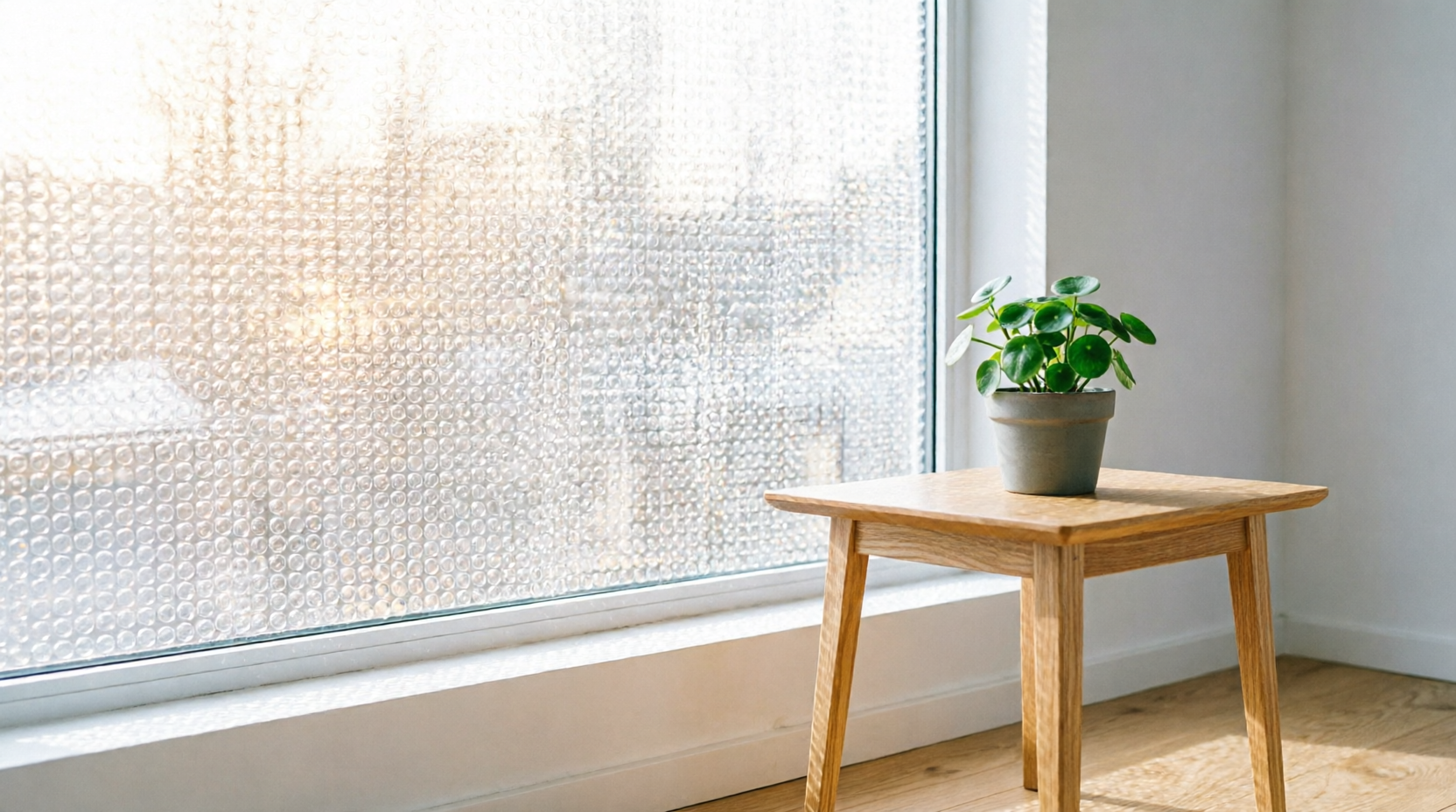
The Bubble Wrap Window Trick: How to Lower AC Bills for Pennies
Staying comfortable in your own home shouldn’t feel like a luxury, but utility costs keep climbing. In summer, ordinary window glass acts like a heat funnel — it absorbs outdoor warmth and radiates it straight into the room, forcing your AC to run almost constantly.
Double-pane replacement windows fix this properly, but they’re a multi-thousand-dollar project that’s out of reach for most budgets. There’s a much cheaper stopgap sitting in your recycling bin: ordinary bubble wrap.
The short answer
Does the bubble wrap trick actually reduce cooling costs? Yes. Pressing large-bubble shipping wrap onto clean window glass — held in place with nothing but a water mist — creates a layer of trapped, static air. That trapped air acts as a cheap insulating barrier, cutting radiant heat transfer through single-pane glass by up to roughly 45%, without noticeably dimming the room.
Why trapped air actually blocks heat
Single-pane glass conducts heat efficiently. When it’s hot outside or the sun hits the glass directly, that heat moves straight through the pane and radiates into your room.
Bubble wrap works because each little plastic cell seals off a pocket of air that can’t circulate. Air that’s locked in place like this — sometimes called “dead air” — is a poor conductor, so it slows down the heat trying to pass through. Press the flat side of the wrap onto the glass and you’re effectively lining the window with thousands of tiny insulating air pockets. Outdoor heat still hits the glass, but it loses much of its momentum crossing that trapped-air layer before it ever reaches your room — which means your air conditioner doesn’t have to work nearly as hard.
How to install it (no tools, under 5 minutes a window)
1. Gather your materials. You’ll need a roll of bubble wrap, kitchen scissors, and a spray bottle of clean, lukewarm water. Go for wrap with larger bubbles — around ½ inch across — rather than the small, tight bubbles used to wrap fragile items. Bigger bubbles mean a deeper, more effective air layer.
2. Cut it to size. Measure the inside dimensions of the window pane and trim the sheet to match that perimeter closely. Leaving gaps around the edges gives warm air a path around your barrier instead of through it.
3. Clean the glass thoroughly. Wipe the pane down with a vinegar solution or warm soapy water first. Any leftover dust, pollen, or grease will break the water’s surface tension and cause the plastic to peel loose at the edges over time.
4. Mist and press it on. Set your spray bottle to a fine, wide mist and spray the glass evenly. Place the sheet with the bubble side facing the wet glass, then press the flat backing smooth. Smooth out any large air pockets by hand, working from the center outward — the water’s surface tension is what holds it firmly in place.
Common myths, cleared up
“Any thin plastic wrap works the same.” Not true. Ordinary cling film or thin retail wrapping has no sealed air pockets, so it provides no meaningful insulation. The trapped-bubble structure is what does the actual work.
“It’ll block your view completely.” It softens and blurs the view rather than blocking it — you still get roughly 85% of natural daylight coming through, just with more privacy than bare glass.
“You need special glue or tape.” You don’t. Plain water uses simple surface tension to hold the material in place, and it comes off without leaving any residue.
When this trick won’t help much
This isn’t a universal fix. A few situations where it underperforms:
- Modern double-pane, low-E windows. If you already have efficient double-glazed windows, bubble wrap adds little on top of what’s already there — it’s really meant for older single-pane glass.
- Textured or frosted glass. The water-seal method needs a smooth, flat, non-porous surface. On ripple-textured or frosted panes, the sheet will slide off within minutes.
- Very sunny, unshaded windows with tinted plastic. Clear bubble wrap is generally fine since it lets light through, but avoid tinted or opaque wrap on large south-facing windows — trapping too much heat against the glass can risk thermal stress.
Getting a tighter seal: the edge-taping upgrade
The water layer secures the middle of the sheet well, but the edges can curl slightly over time, letting small drafts sneak behind the plastic and quietly reduce its effectiveness.
To fix that, cut your sheet about ¼ inch short of the frame on all sides, apply it with the water-mist method as usual, then run a strip of low-tack, UV-resistant painter’s tape around the perimeter — overlapping both the plastic edge and the window frame. That perimeter seal locks the dead-air layer in place and noticeably improves the barrier’s performance.
Is it actually worth it?
| Factor | Retail insulation film | Bubble wrap method |
|---|---|---|
| Upfront cost (5 windows) | $35–$55 | $0–$5 (often free from packaging) |
| Tools required | Heat gun, utility knife, heavy tape | Scissors, spray bottle |
| Install time per window | ~25 minutes | ~4 minutes |
| Estimated heat-transfer reduction | ~50% | ~45% |
| Risk to frame/paint | Adhesive residue, possible tearing | None |
If you can source clean packing material from deliveries or a local buy-nothing group, insulating a whole room can cost you nothing at all — and the reduced AC runtime shows up directly in your electric bill.
FAQ
How long does it stay attached with just water? On a properly cleaned window, expect six to nine months without it sliding. If an edge starts to loosen as the air dries out, just peel it back, re-mist, and press it back down.
Will this damage rental windows or void a deposit? No — since it relies on water rather than glue, tape, or staples, it leaves zero residue. That makes it a safe option for renters.
Can I reuse the same sheets next year? Yes. Peel them off when the season changes, label each one by room, roll them up, and store them for next year.
Which side faces the glass? The bubble side faces the wet glass; the flat side faces into the room.
Does it help in winter too? Yes — insulation works both directions. In winter, the same trapped-air layer helps keep indoor heat from escaping through cold glass, so it’s worth leaving up year-round if it’s not in your way.
Written by Sharjeel — Founder, informix.today Last updated: July 2026
Disclaimer: This article is for general informational purposes only and isn’t professional financial or engineering advice. Test any DIY method safely and check your specific window type first.