Draft-Proof Your Front Door in an Afternoon With a Homemade Door Snake
Learn how to make a homemade door snake that blocks under-door drafts fast, costs very little, and fits a frugal home comfort routine.
A drafty front door is one of those problems that feels small until you notice how much it affects comfort. If cold air keeps slipping in at the bottom of the door, a homemade door snake can be a fast, low-cost way to block that gap and make the room feel calmer right away. For moving parts like doors, the Department of Energy says weatherstripping is the right category of fix, and it also notes that doors can contribute significantly to air leakage.
If you can see daylight around the frame, or if the door rattles and still leaks after you add a stopper, the problem is probably larger than the gap under the door. The DOE recommends caulking or weatherstripping for air leaks, and ENERGY STAR notes that visible gaps and trim leaks are separate issues that need their own fix.
What a door snake is really doing
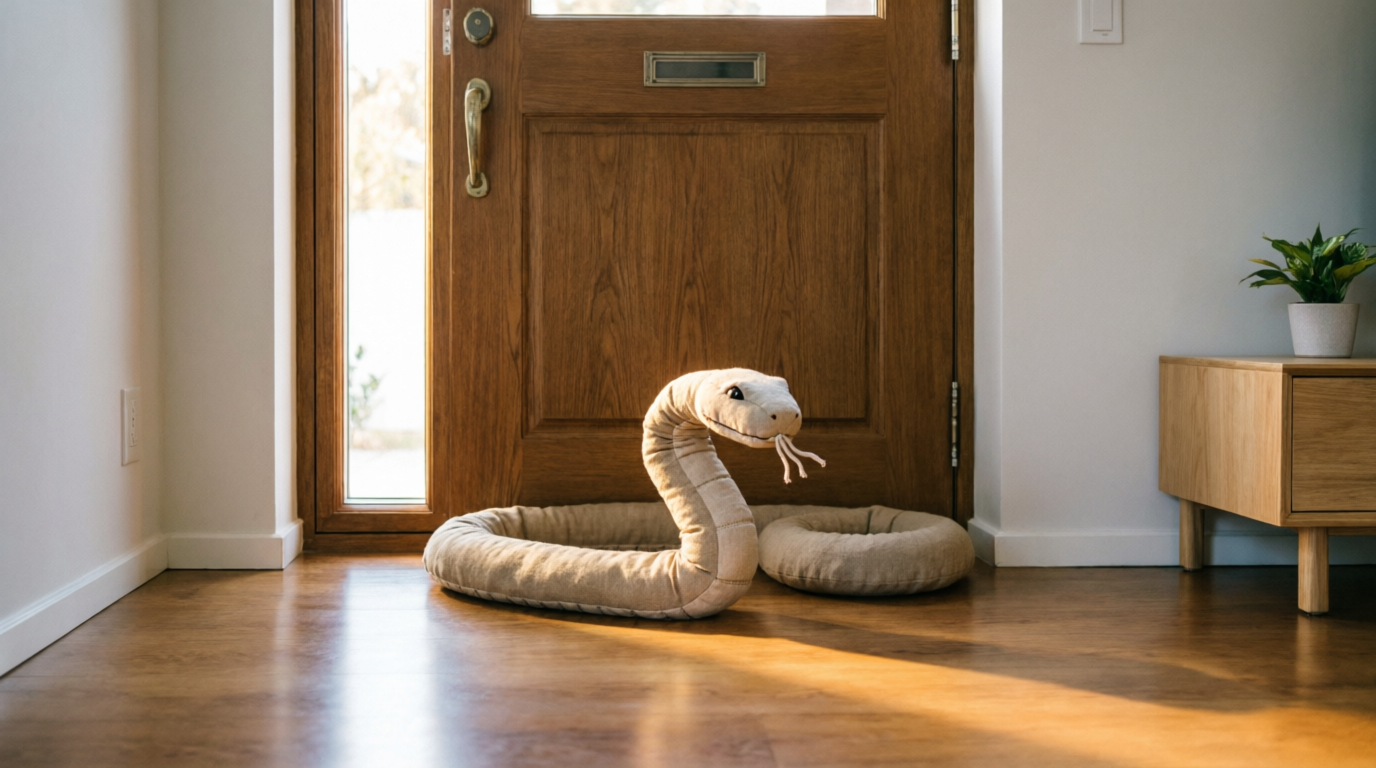
A door snake is not magic. It is simply a soft barrier that sits at the bottom of the door and slows down the air movement under the gap. That makes it useful for cold drafts, dust, light airflow, and a bit of noise reduction. It is especially handy when you need a fast, renter-friendly fix and do not want to drill, glue, or replace hardware. For bigger or more permanent air leaks, the DOE still points back to weatherstripping, thresholds, and door bottoms with sealing gaskets.
Materials that work well
For a homemade version, keep it simple. A good door snake can be made from:
- sturdy fabric for the outer tube
- old clothing, fabric scraps, or polyfill for the filling
- a zipper, hand stitching, or a sewn-shut end
- a length that matches the door width, with a little extra for overlap
A slightly firm fill usually works better than a loose one because it stays in place. But do not overpack it. If it gets too stiff or too heavy, it can drag on carpet, shift when the door opens, or make the door harder to close cleanly. The DOE’s guidance on weatherstripping is a useful reminder here: any seal should close tightly without making the door difficult to open or shut.
How to make one in an afternoon
A simple version takes less time than most people expect.
Step 1: Measure the door
Measure the width of the door from edge to edge. Add a little extra if you want the snake to slightly overlap the sides.
Step 2: Choose a fabric tube
Use a durable cloth that will not stretch out quickly. Cotton canvas, denim, or a strong thrifted fabric works well.
Step 3: Fill it evenly
Add enough filling so the tube feels full but still flexible. Uneven filling creates gaps, and gaps are exactly what you are trying to stop.
Step 4: Close the ends securely
Sew the ends shut or use a design that stays closed after washing. If you are making one for seasonal use, make it easy to remove and clean.
Step 5: Test it on the door
Slide it into place and close the door slowly. The goal is a snug fit that blocks the floor gap without creating resistance.
ENERGY STAR’s leak-detection tips are useful here too. If you are unsure whether the door is still leaking, check for movement, gaps, or smoke drifting near the seam. Their guidance also notes that paper, incense, and daylight can all help reveal weak spots.
Cost-Saving Reality
A door snake is one of the cheapest ways to improve comfort fast, especially if your main problem is a gap under the door. It can help you feel the difference immediately without a large purchase. But the real savings usually come when you treat it as part of a bigger air-sealing plan instead of the whole plan. The DOE says sealing air leaks, weatherstripping doors and windows, and replacing worn door bottoms or thresholds are all part of the same energy-saving strategy.
That is the key reality many people miss: if the door snake makes the room more comfortable, great. If the draft is still obvious, the leak may be coming from the jamb, trim, threshold, or door bottom. In that case, the snake is helping, but it is not the final fix.
Common Mistakes to Avoid
The most common mistake is making the snake too loose. A soft, floppy tube slides around and leaves gaps.
The second mistake is making it too bulky. A very thick stopper can interfere with the door swing or wear down too fast on carpet.
The third mistake is using it as a replacement for a damaged seal. If the door frame has visible gaps, the DOE recommends proper caulking or weatherstripping for those moving and stationary parts, not just a floor-level blocker.
A fourth mistake is ignoring the rest of the doorway. If the door still leaks around the sides, the fix is probably elsewhere. ENERGY STAR specifically points out that leaks behind trim can require a different approach, and the DOE says exterior doors can waste energy through air leakage and conduction, especially when they are old or improperly installed.
Myth vs Reality
Myth: A door snake fixes any drafty door.
Reality: It mainly helps with the gap under the door. Side leaks, trim leaks, and threshold problems need different fixes.
Myth: The heaviest stopper is always the best one.
Reality: A good fit matters more than weight. Too much weight can make the door harder to use.
Myth: You only need this in winter.
Reality: A door snake can help with summer dust, warm drafts, and general comfort too. Air sealing is a year-round issue.
Myth: If the door still leaks, the idea failed.
Reality: That usually means you found only one of several leak points. ENERGY STAR and DOE both treat air sealing as a layered job.
When a door snake is not enough
If your door still feels drafty after the stopper is in place, move up one level. Check the door bottom, the threshold, the jamb, and the trim. The DOE recommends weatherstripping for movable parts like doors and caulk for stationary cracks, while ENERGY STAR points out that leaks behind trim can also be part of the problem.
This is also where a basic home air-sealing mindset helps. The DOE says to detect leaks first, then choose the right material. In practice, that means the door snake is the quick win, but the real comfort improvement often comes from combining several small fixes instead of relying on one.
Advanced note for experienced readers
For readers who already know the basics, the main upgrade is not just “make it thicker.” It is to match the stopper to the doorway.
On tile or hardwood, a slightly firmer tube may stay in position better. On carpet, a lighter and flatter design may work better so it does not drag. If the bottom gap changes across the width of the door, a uniform snake may leave one side under-sealed. In that case, a shaped design or layered seal may work better than a simple straight tube.
The bigger lesson is that energy losses do not usually come from only one obvious gap. The DOE notes that doors, thresholds, and other building interfaces can all matter, and larger air-sealing projects may also require attention to ventilation and combustion safety. If you are doing more than a simple draft stopper and are tightening up the home broadly, the DOE recommends assessing ventilation needs first.
A smart place to use this inside a bigger savings routine
A door snake fits well inside a low-cost “seal the leaks first” routine. The same mindset shows up in other simple home-saving projects, like window draft control and basic appliance upkeep. If you already use small fixes to make the home more efficient, this one is a natural next step. A related read on the site is bubble-wrap window insulation trick, which follows the same frugal-living logic of sealing the easy leaks first.
FAQ
1) Does a door snake replace weatherstripping?
No. A door snake helps mainly at the bottom of the door. Weatherstripping is the proper fix for movable components like doors, and caulk is for stationary cracks and gaps.
2) Will it work on a front door with carpet?
Usually yes, but the shape matters. A door snake that is too thick can drag or shift, so a flatter, well-fitted version often works better on carpet. The DOE says the seal should close tightly without making the door hard to use.
3) How do I know whether the door is really leaking?
Look for daylight, movement, rattling, or drafts. The DOE says if you can see daylight around a door frame, that door leaks, and ENERGY STAR suggests simple tests like paper and incense to spot weak seams.
4) Can I use a rolled-up towel instead?
You can use one as a temporary stopgap, but a fitted homemade snake usually works better because it stays in place and fits the gap more consistently. A loose towel is more likely to slide or leave openings. This is an inference based on how the DOE says seals should fit tightly and stay usable.
5) What should I do if the draft is still there after adding the snake?
Check the sides, trim, threshold, and door bottom. If the gap is not just underneath, the DOE and ENERGY STAR both point to weatherstripping, caulking, or trim sealing as the next step.
Written by Sharjeel — Founder, informix.today
Last Updated: May 2026
Disclaimer: This article is for informational purposes only and does not constitute professional financial or legal advice. Always test DIY hacks safely.