Is Your Fridge Stealing Cash? 3 Tweaks to Cut Its Power Draw
Stop letting a dirty refrigerator drive up your electric bill. Learn 3 simple, zero-budget maintenance tweaks to lower your appliance’s daily power draw and save cash.
The 3-Step Fridge Efficiency Audit
The Problem: A neglected refrigerator can quietly consume up to 30% more electricity as it struggles to stay cold.
Core Tweaks: Deep-cleaning condenser coils, checking door seals, and optimizing internal airflow spacing.
Direct Impact: Drops individual appliance energy draw, preserving cash without affecting food safety.
Time Required: Less than 45 minutes of simple, zero-budget DIY maintenance using basic household items.
HTML
<div style="background-color: #f8fafc; border: 1px solid #e2e8f0; border-left: 5px solid #0284c7; padding: 22px; border-radius: 8px; margin-bottom: 28px; font-family: -apple-system, BlinkMacSystemFont, 'Segoe UI', Roboto, Helvetica, Arial, sans-serif;">
  <h4 style="margin: 0 0 12px 0; color: #0f172a; font-size: 1.2rem; font-weight: 700; letter-spacing: -0.025em;">The 3-Step Fridge Efficiency Audit</h4>
  <p style="margin: 0; color: #334155; font-size: 0.95rem; line-height: 1.65;">
    <strong>The Problem:</strong> A neglected refrigerator can quietly consume up to 30% more electricity as it struggles to stay cold.<br>
    <strong>Core Tweaks:</strong> Deep-cleaning condenser coils, checking door seals, and optimizing internal airflow spacing.<br>
    <strong>Direct Impact:</strong> Drops individual appliance energy draw, preserving cash without affecting food safety.<br>
    <strong>Time Required:</strong> Less than 45 minutes of simple, zero-budget DIY maintenance using basic household items.
  </p>
</div>
Every single second of the day, one appliance in your home quietly runs in the background, constantly pulling power from the grid. It’s your refrigerator. While modern units are built to be more efficient than the energy-guzzlers of the 1990s, an unmaintained fridge quickly turns into a major financial drain on your monthly household budget.
When food prices keep climbing, the last thing you need is a kitchen appliance wasting your hard-earned money. Over time, invisible dust buildup, worn-out rubber door seals, and crowded internal shelves force your fridge’s compressor to work twice as hard to maintain safe temperatures.
The good news is that you don’t need to buy an expensive new eco-friendly model to cut your electricity bill. By spending less than an hour on three basic maintenance tweaks using tools you already own, you can easily restore your refrigerator’s efficiency and stop it from running up your power bill.
How much electricity can you save by tuning up an old refrigerator? A dirty, unmaintained refrigerator can easily consume 20% to 30% more energy than a clean one. By performing a basic DIY efficiency audit—cleaning the coils, checking the gasket seals, and organizing internal space—the average household can cut its daily appliance power draw and save significant cash over the course of a year.
Why Your Refrigerator’s Compressor is Working Overtime
To understand why these basic tweaks work so well, it helps to understand how your fridge actually keeps things cold. Your refrigerator doesn’t technically create cold air; instead, it extracts heat from inside the cabinet and dumps it outside into your kitchen.
This heat exchange happens through a system of cooling lines and external metal loops called condenser coils. When these metal coils are buried under a thick blanket of household dust and pet hair, the heat gets trapped. It can’t escape into the room efficiently.
As a result, your refrigerator’s compressor has to run for much longer cycles just to keep your milk from spoiling. The longer that mechanical compressor runs, the more your utility bill ticks upward.
Tweak 1: Clear the Dust Barrier from Your Condenser Coils
If you have never cleaned the coils on your refrigerator, they are likely coated in a thick layer of grey debris. This is the single biggest cause of hidden energy waste in kitchen appliances.
[IMAGE PROMPT: ]
[TITLE: Cleaning dusty refrigerator condenser coils to restore cooling efficiency]
[ALT TEXT: Close-up of dusty refrigerator condenser coils being cleaned with a brush to improve heat exchange.]
How to Clean the Coils Safely
- Pull the Plug: For absolute safety, pull your refrigerator out from the wall and unplug its power cord from the wall outlet. Don’t worry, your food will stay perfectly cold while you work for 15 minutes.
- Locate the Coils: Depending on your specific model, the coils will either be mounted openly on the back of the unit or hidden behind a removable black vent panel at the very bottom front or back.
- Vacuum and Brush: Use the narrow crevice or upholstery brush attachment on your home vacuum cleaner to gently pull away the heavy blankets of dust. If you have pet hair stuck between the tight metal loops, an old dish brush or a long-handled bottle brush works perfectly to scrape it loose.
- Slide and Restart: Vacuum up any loose dirt that fell onto the kitchen floor, slide the refrigerator back into position leaving a few inches of breathing room against the wall, and plug it back in.
Tweak 2: The Paper Test for Weak Gasket Seals
Your refrigerator can have perfectly clean coils, but if the flexible rubber door gasket is cracked, warped, or losing its magnetic grip, cold air will constantly escape into your kitchen. This forces warm room air inside, causing frost to build up and making the cooling system run continuously.
To see if your door seals are leaking cash, you don’t need any special diagnostic tools. You can run a quick diagnostic check using a simple piece of paper or a common bill.
We previously highlighted this exact low-cost mechanical trick in our deep-dive guide on how to perform the dollar bill fridge door test seal leak check. Simply close your refrigerator door directly onto a piece of paper so that half of it hangs out. Give it a gentle pull. If the paper slides out easily with zero resistance, your rubber seal is failing to compress properly.
HTML
<div style="margin: 20px 0; padding: 15px; background: #fff; border: 1px solid #e5e7eb; border-radius: 8px; box-shadow: 0 1px 3px rgba(0,0,0,0.05); font-family: sans-serif;">
  <h5 style="margin: 0 0 12px 0; color: #1f2937; font-size: 1rem; font-weight: 600;">How to Revive Worn Rubber Gaskets Without Buying Replacements</h5>
  <ol style="margin: 0; padding-left: 20px; color: #4b5563; font-size: 0.9rem; line-height: 1.5;">
    <li style="margin-bottom: 8px;">Mix warm water with a few drops of mild dish soap. Use an old rag to wipe away sugary spills and crumbs hidden deep inside the rubber folds.</li>
    <li style="margin-bottom: 8px;">If you find spots where the rubber is flattened or misshapen, use a handheld hair dryer on medium heat to gently warm the stiff plastic for 2 to 3 minutes.</li>
    <li style="margin-bottom: 8px;">While the rubber is warm and pliable, gently pull the folds outward with your fingers to restore its original shape.</li>
    <li style="margin-bottom: 0;">Smear a very thin layer of petroleum jelly (Vaseline) along the hinge side of the gasket. This keeps the rubber supple and prevents it from twisting out of place when you close the door.</li>
  </ol>
</div>
Tweak 3: Balance Internal Airflow Spacing
How you arrange your food inside the refrigerator directly impacts how much electricity the appliance uses. A completely empty fridge and a stuffed-to-the-brim fridge both waste power, but for different reasons.
The Danger of Overstuffing
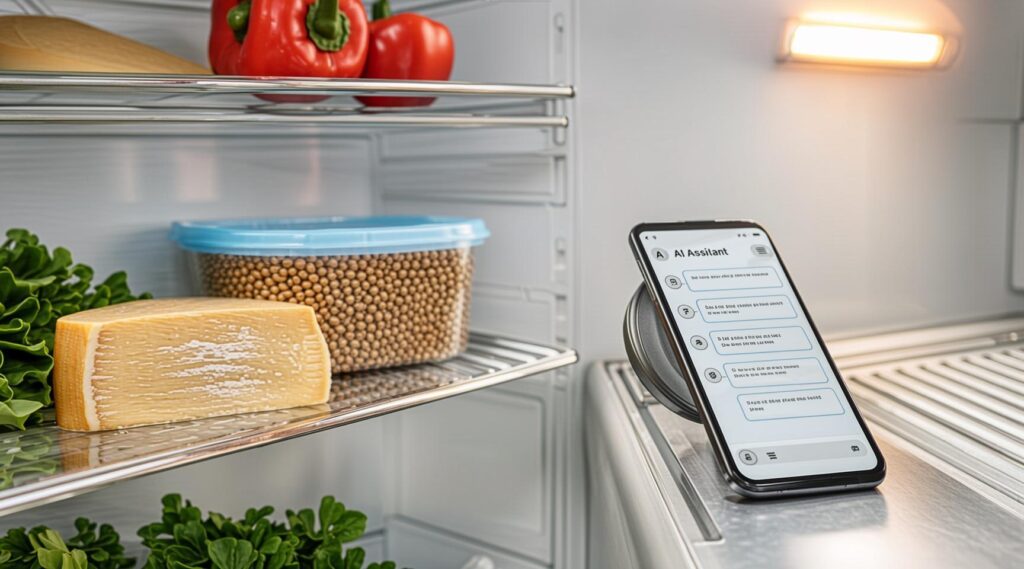
When you jam leftovers and groceries tightly against the interior back walls, you block the internal air vents. Cold air needs to circulate freely around your food items to maintain an even temperature. If the airflow is blocked, pockets of warm air form, forcing the thermostat to trigger longer cooling cycles.
The Sweet Spot for Storage
Aim to keep your refrigerator roughly 70% to 80% full. This fills the space with cold thermal mass (like liquids and solid food items) that holds onto the cold whenever you open the door, preventing all the cold air from rushing out onto the kitchen floor.
If you are currently running low on groceries, you can easily fill those empty spaces without spending money. Simply fill a few old plastic juice jugs or soda bottles with tap water and place them at the back of the bottom shelves. These water bottles will act as “cold batteries,” stabilizing internal temperatures so the compressor doesn’t have to cycle on as frequently.
Real-World Efficiency Checking: Myth vs. Reality
When you look for ways to cut appliance energy costs online, you often run into generic, overhyped household tips that don’t match up with real-world physics. Let’s look at the facts behind common refrigerator myths.
Myth 1: Turning your thermostat to the lowest setting saves money
- The Reality: Some people think lowering their settings keeps things cold longer so the fridge can stay off. In reality, setting your fresh food compartment below 35°F (1.6°C) or your freezer below -5°F (-20.5°C) forces the compressor into long, high-power cycles without extending food shelf-life. Keep your fresh food section set between 37°F and 40°F for the best balance of safety and energy savings.
Myth 2: Placing a standalone freezer in a hot garage is fine if it’s modern
- The Reality: Standard residential cooling systems are designed for temperate indoor rooms. When ambient garage temperatures climb past 95°F in the summer, the temperature difference between the room and the inside of the freezer grows too large. Heat leaks inside rapidly, forcing the unit to run constantly, which can shorten the lifespan of your compressor.
Myth 3: Putting warm leftovers right into the fridge saves kitchen cleanup time
- The Reality: Placing a steaming hot pot of soup or fresh food directly onto a shelf creates a sudden burst of heat and humidity inside the closed cabinet. The appliance has to work extra hard to drop the temperature back down, which can slightly warm up nearby milk or eggs. Let your hot food cool on the counter for 30 to 45 minutes before putting it away.
Hidden Factors: When These Adjustments Won’t Work
While basic maintenance solves most efficiency issues, there are specific situations where simple cleaning won’t fix a high power bill.
- Damaged Internal Frost-Free Timers: If your refrigerator has a broken automatic defrost timer, thick ice will form directly over the hidden cooling coils inside the freezer walls. This ice acts as insulation, blocking the cooling system. If you hear your fridge running 24/7 and see ice building up on the back wall of the freezer, you likely need to manually defrost the unit or replace a low-cost defrost component.
- High Ambient Indoor Humidity: In very humid climates or homes without air conditioning, moisture can condense along the outer metal cabinet walls of older refrigerators. This forces the built-in frame heaters to run continuously to prevent exterior sweating, which increases the appliance’s total energy draw regardless of how clean the coils are.
- Worn-Out Mechanical Compressors: Mechanical parts naturally break down over time. If your refrigerator is over twenty years old, its internal pump seals may simply be worn out. If the compressor is failing mechanically, it will pull maximum power from the wall while struggling to keep the inside cool, even if the exterior coils are completely spotless.
Pro Optimization: The Condenser Fan Check
Once you feel comfortable with basic coil cleaning, you can take your maintenance a step further with this simple check that standard lifestyle blogs often miss: inspecting the rear condenser fan blade.
On most refrigerators with bottom-mounted coils, a small electric fan sits right next to the compressor to help push warm air away from the metal lines. Over time, loose pet hair and kitchen dust can wrap around the central fan axle, slowing it down or stopping it completely.
When you pull your fridge out from the wall to clean the coils, take a flashlight and look at the small fan blades near the bottom compressor dome. Spin the plastic blades gently with a finger to make sure they rotate freely without catching on anything. Clearing away stuck lint from the fan axle ensures your heat exchange system operates at peak performance, maximizing your energy savings.
The True Financial Impact of Regular Maintenance
Taking care of your refrigerator isn’t just about home maintenance—it’s a reliable way to save money. Let’s look at a clear cost breakdown showing what a typical household saves by performing these basic tune-ups:
| Refrigerator Status | Average Monthly Power Draw | Estimated Annual Energy Cost | Expected Compressor Lifespan | Emergency Repairs Needed |
| Neglected Unit (Dirty coils, leaking seals, blocked vents) | 85 kWh to 110 kWh | $165 to $220+ per year | 7 to 9 Years (Early failure from overheating) | High risk of compressor burnouts |
| Maintained Unit (Clean coils, tight seals, proper airflow) | 50 kWh to 65 kWh | $95 to $130 per year | 14 to 18+ Years (Runs cool and efficient) | Very low risk over the unit’s lifespan |
| Total Household Savings | Save 35+ kWh every month | Save $70 to $90+ every year | Doubles the lifetime of your appliance | Saves hundreds in repair fees |
Frequently Asked Questions (FAQ)
How often should I clean the dust off my refrigerator coils?
For most homes, cleaning the coils once every 12 months is plenty to maintain peak efficiency. However, if you have multiple long-haired pets or a dusty home layout, those low-mounted vents will collect dirt much faster. In those cases, a quick 10-minute vacuuming session every 6 months will keep your energy bill from creeping upward.
Why is the side wall of my refrigerator warm to the touch?
Don’t worry, this is completely normal behavior for many modern appliances. Many manufacturers build the hot condenser lines directly into the structural outer side panels of the cabinet to save space on the back. Just make sure to leave a 1-inch to 2-inch gap between the sides of your fridge and your kitchen cabinets so the heat can dissipate properly.
What should I do if my refrigerator door gasket is torn?
If the rubber seal has a large tear or a missing chunk, standard tune-up tricks won’t fix the leak. You will need to replace the gasket. You can easily find budget-friendly replacement seals online by searching for your fridge’s exact model number. Installing a new one is a straightforward DIY project that requires no special tools and pays for itself in energy savings within a few months.
Does a frost buildup inside my freezer increase my electricity bill?
Yes, absolutely. Thick ice buildup acts like an insulating blanket over the cooling coils, making it much harder for the system to cool the freezer compartment. If your fridge doesn’t have an automatic defrost cycle, you should manually defrost it whenever the ice grows thicker than a quarter of an inch to keep it running efficiently.
Can I save more money by plugging my fridge into a smart timer?
No, never plug your refrigerator into a daily timer to shut it off at night. Turning off your fridge allows internal temperatures to quickly rise past the safe 40°F threshold, causing bacteria to multiply and spoiling your milk and meats. It also forces the appliance to run at maximum power for hours the next morning just to cool back down, wiping out any potential energy savings.
Sourcing Your Next Efficiency Win
If you want to continue optimizing your home’s resource use alongside your newly efficient refrigerator, you can easily apply these same hands-on strategies to other areas of your home.
For instance, if you want to grow fresh ingredients to fill your newly organized kitchen shelves without spending money on groceries, look at our actionable guide on how to harvest and propagate seeds from grocery vegetables.
If you are looking for smart tech solutions to manage your home expenses, you can use our guide on setting up a subscription cleanout free AI audit to find and eliminate hidden monthly service fees, keeping more money in your pocket alongside your lower electric bills.
Written by Sharjeel — Founder, informix.today
Last Updated: May 2026
Disclaimer: This article is for informational purposes only and does not constitute professional financial or legal advice. Always test DIY hacks safely.