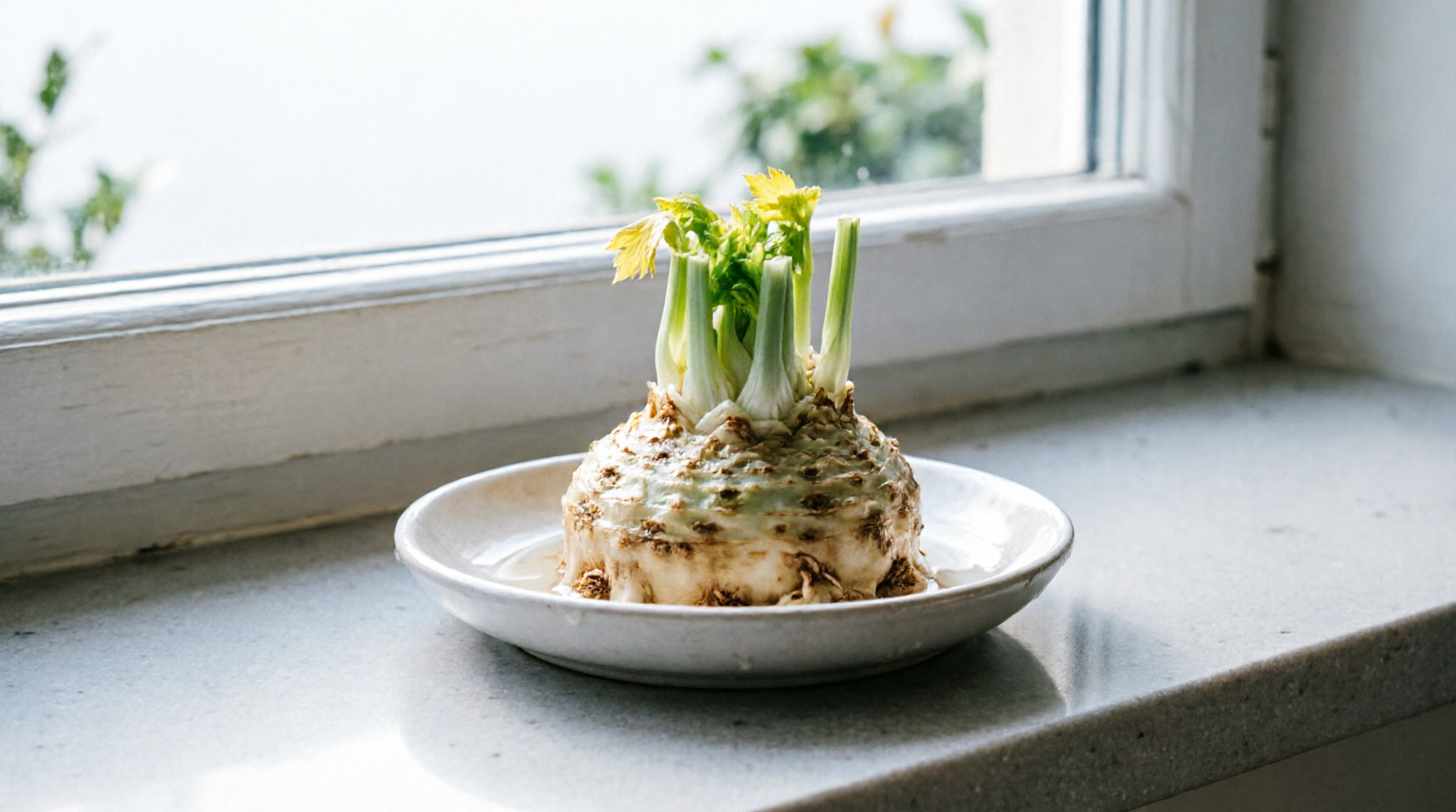
How to Regrow Celery, Leeks, and Lettuce From Kitchen Scraps on a Plate of Water
Stop throwing away celery bases and lettuce stumps. This practical guide shows exactly how to regrow fresh food from kitchen scraps using nothing but a shallow dish of water — no pots, no soil, no cost.
Most people cut the base off their celery, snap the roots off a leek, and drop them straight into the bin without a second thought. But those stumps, roots, and bases are still biologically alive. Given a shallow dish of water and a bright windowsill, they’ll start producing fresh food again — sometimes within two days.
This isn’t a gardening project. You don’t need pots, compost, tools, or outdoor space. You need a plate, some water, and the parts of the vegetable you were already about to throw away.
⚡ Quick Summary: Regrow Celery, Leeks & Lettuce From Scraps
- What this is: A practical guide to regrowing grocery vegetables using nothing but water and a plate.
- Who it helps: Anyone who buys celery, lettuce, or leeks and throws the base straight in the bin.
- Problem it solves: Cuts grocery spending by turning food waste into food production — no pots, soil, or tools needed.
- Main takeaway: Celery is the most rewarding regrowth. Lettuce gives fast leaves. Leeks give free green tops.
- What to do next: Save the base of your next bunch of celery or leek. Sit it in a shallow plate of water today.
- Why it matters now: Grocery prices are still rising. Regrowing costs nothing and takes under two minutes to start.
What You Can Actually Regrow — And What You Can Honestly Expect
Before anything else, it’s worth being direct about what works well, what works partially, and what barely works at all. Most guides skip this and just tell you everything is possible. The reality is more nuanced.
Celery is the standout winner. The base you cut off — the dense, pale stump at the bottom — will reliably sprout new stalks from the centre when placed in water. Within about a week you’ll see small yellow-green leaves pushing up. Within two to three weeks you’ll have tender, flavourful inner stalks you can actually eat or cook with. Celery regrown in water tastes lighter and less stringy than shop-bought, and it keeps producing new growth for weeks.
Lettuce (romaine and butterhead in particular) regrows quickly and visibly — you’ll see green leaves emerging from the cut top within three to five days. The honest caveat is that water-regrown lettuce produces thinner leaves than the original plant, and the flavour becomes slightly more bitter after the second cut. It’s genuinely useful for sandwiches, garnishes, and salads, but it isn’t a full replacement for a fresh head. Think of it as bonus leaves, not a whole new lettuce.
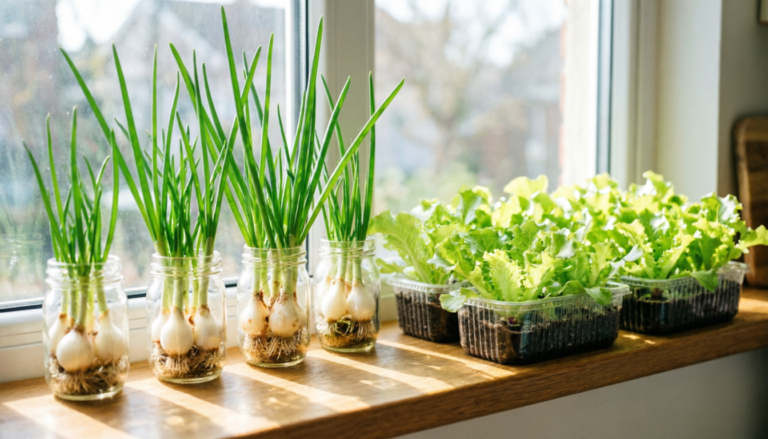
Leeks behave differently. The white stem — the part you actually paid for — will not regenerate in water. What does regrow, reliably and indefinitely, is the green top. If you cut a leek and leave two or three inches of the green part attached to the base, place it in a shallow dish of water, and put it somewhere with decent light, it will keep producing green leek tops that are perfect for soups, stir-fries, and garnishes. The green tops are mild, fresh, and free.
| Vegetable | What Regrows | Honest Usable Yield | Days to First Harvest |
|---|---|---|---|
| Celery | Full inner stalks and leaves | High — genuine cooking ingredient | 10–21 days |
| Romaine lettuce | Tender inner leaves | Medium — useful but thinner than original | 3–7 days |
| Butterhead lettuce | Loose inner leaves | Medium — best for garnish | 4–8 days |
| Leek | Green tops only (not the white stem) | Moderate — good for soups, ongoing | 5–10 days |
What You Need (It’s Almost Nothing)
- The cut base or stump of celery, lettuce, or leek
- A shallow plate, bowl, or dish
- Water
- A windowsill with reasonable light
That’s genuinely the complete list. No compost. No grow lights. No fertiliser. No special containers.
How to Do It: Step by Step
Celery
When you buy a bunch of celery, don’t cut directly through the stalks. Instead, cut them a few inches above the base so you’re left with a chunky stump about two to three inches tall. This stump is your regrowth base.
Place it cut-side up in a shallow dish. Add enough water to cover the bottom of the stump — roughly half an inch to an inch deep. You want the base sitting in water, not submerged.
Put the dish on a windowsill. Change the water every two days. Within about a week, pale shoots will begin emerging from the centre of the stump. By two to three weeks, you’ll have small but usable celery stalks growing from the middle.
Once roots appear — thin white threads growing downward from the base — you can either continue harvesting from the water, or transplant the whole stump into a pot of compost for longer, more productive growth. (More on that in the advanced section below.)
Lettuce
Cut the outer leaves of your lettuce as normal for cooking or salads. Leave the inner leaves and the central core intact. You need the lowest two to three inches of the lettuce head, including the core.
Place it in a shallow dish with about half an inch of water — just enough to keep the base damp. Sit it on a bright windowsill.
Within a few days you’ll notice small new leaves curling up from the centre. Harvest them gently as needed. The plant won’t grow back to its original size, but it will keep producing new leaves for one to three weeks.
[Image suggestion: Close-up of a lettuce stump in a white ceramic bowl with new leaves emerging — bright daylight, kitchen window in background]
Leeks
Cut your leeks in the usual way, but instead of discarding the base entirely, leave about two to three inches of the green top attached to the root end. If your leeks came without roots, that’s fine — the cut end alone will still regrow.
Sit the base in a shallow dish with a small amount of water covering just the bottom of the stump. Place it somewhere light. Within five to ten days, fresh green tops will push up. Snip them as you need them for cooking.
The leek base will keep regrowing for several weeks as long as you keep water in the dish and harvest the tops rather than pulling the whole plant out.
Why Tap Water Is Quietly Killing Your Regrowth Attempts
If you’ve tried this before and it didn’t work, the water itself may have been the issue — and almost nobody mentions this.
Most UK and US tap water is chlorinated. Chlorine is added to kill bacteria in the water supply, which is useful for drinking, but it’s not ideal for plant root development. When you place a fresh vegetable stump in heavily chlorinated tap water, root formation can be slower and patchier than it should be.
The simplest fix is to fill your dish from the tap and let it sit for thirty minutes before placing the vegetable in it. This allows a significant portion of the chlorine to off-gas naturally. It’s a small step, but experienced regrowers consistently notice faster results with rested water than straight from the tap.
Hard water — common in many parts of England and the US Midwest — leaves white mineral deposits on the cut surface of the vegetable over time. These deposits can partially block water uptake. If you notice white crusting forming, rinse the base gently when you change the water.
Rainwater or filtered water produces noticeably better results if you have access to either. The difference is most obvious with celery, which is the most sensitive of the three to water quality.
Water temperature also matters more than people expect. In winter, tap water comes out very cold. Cold water slows root development significantly. Let it reach room temperature before refilling the dish — a simple but overlooked detail.
Practical water checklist:
- ✅ Let tap water sit 30 minutes before use
- ✅ Change water every 1–2 days (daily in warm weather)
- ✅ Use room temperature water, especially in winter
- ✅ Rinse the base gently when changing water
- ✅ Use filtered or rainwater if regrowth stalls
The Windowsill Position Problem Nobody Talks About
“Put it on a sunny windowsill” is advice that gets repeated in every tutorial. It’s also advice that ignores about half the real variables.
South-facing windowsills (in the northern hemisphere) receive the most direct sunlight and are by far the best for regrowth. Plants on a south-facing sill in spring and summer will outperform plants on any other sill by a significant margin.
North-facing windowsills receive little or no direct sun. Lettuce can cope — it’s relatively tolerant of lower light. Celery will produce very leggy, pale growth and struggle. If your only windowsill faces north, consider placing a piece of white card or kitchen foil alongside the plant to reflect available light back onto it.
East and west-facing sills fall in the middle. They work, but regrowth will be somewhat slower than a south-facing position.
In winter, even a south-facing windowsill in northern Europe or the northern United States may not provide enough light for celery to produce well. A kitchen worktop under a pendant light with a warm bulb can actually outperform a winter windowsill if the window is small or north-facing.
One more thing: be careful about placing dishes directly against cold single-glazed glass in winter. The glass conducts cold air, and the temperature at the base of the plant can drop low enough at night to stall or damage root development. Leave a few inches of space between the dish and the glass, or move it back from the window after dark.
When Water Regrowth Becomes a Health Risk
This section gets left out of almost every guide, but it matters — especially in summer.
Warm, stagnant water is an environment where bacteria multiply quickly. If you leave a vegetable stump in the same water for a week in a warm kitchen in July, you are not growing healthy food — you are growing a petri dish with leaves on top.
Signs to stop and discard:
- Slimy coating on the base of the vegetable
- Water that has become cloudy and smells unpleasant
- Visible mould on the cut surface of the stump
- Stems that feel soft or mushy at the base
In summer, change the water every day rather than every two days. Keep the dish out of direct intense afternoon sun if your kitchen gets hot, since high temperatures accelerate bacterial growth in the water.
Always wash regrown leaves before eating them. This applies even if everything looks clean — the water environment is not sterile, and any leaves that have been sitting near the water surface should be rinsed under cold running water before use.
Romaine lettuce bought pre-cut (already trimmed and packaged) carries a slightly higher bacterial load at the cut surface before you even begin. Rinse the base thoroughly before placing it in water, and be more vigilant about water changes with pre-cut lettuce than with a whole fresh head.
Cost-Saving Reality
Let’s be honest about what the savings actually look like, because this matters for setting expectations.
A bunch of celery costs roughly £0.60–£1.00 in a UK supermarket. A typical bunch gives you one base to regrow. That regrown base will produce usable celery for two to three weeks before output slows — equivalent in volume to perhaps a third to a half of a new bunch. Over the course of a month, a household that regularly reuses celery bases could save £1.50–£3.00 on celery alone.
Individually, these numbers are small. But the habit compounds. If you’re also regrowing lettuce, leeks, spring onions, and eventually other vegetables, the cumulative reduction in grocery waste and repeat purchasing adds up to a meaningful difference over a year — realistically £80–£150 or more for a family that buys these vegetables regularly, based on a consistent habit rather than occasional attempts.
The bigger saving is stopping food waste. The base you used to bin had value you were discarding. That’s the real calculation.
Common Mistakes to Avoid
Putting the stump in too much water. The base needs to sit in shallow water, not be submerged. Too much water accelerates rot before roots can form. Half an inch to an inch is plenty.
Forgetting to change the water. Stagnant water promotes rot and bacterial growth. Change it every one to two days. This single habit determines whether regrowth succeeds or fails more than almost any other factor.
Cutting too close to the base originally. When you buy celery, the urge is to maximise the amount you use from the stalk. But cutting the stump too short (under an inch tall) leaves very little growing tissue to work with. Leave a generous base — two to three inches — for the best results.
Placing in total shade. Vegetables regrow using photosynthesis. No light means no real growth, only the depletion of stored energy. The plant may sprout a little but will exhaust itself quickly without light.
Expecting the same vegetable you started with. Regrowth produces smaller, younger versions of the original plant. Celery stalks will be thinner. Lettuce leaves will be smaller. Leek tops will be thinner than the original green. That’s normal and expected — don’t mistake it for failure.
Giving up after one failed attempt. Different batches of the same vegetable vary in how vigorously they regrow. Celery that’s been sitting in a supermarket cold store for two weeks will regrow more slowly than freshly harvested celery. Try two or three batches before concluding a method doesn’t work for your kitchen.
Myth vs. Reality
Myth: You can regrow a full head of lettuce from a scrap. Reality: You can regrow a useful amount of leaves — enough for a garnish, a side salad, or a few sandwiches over two to three weeks. You won’t produce a full, dense head of lettuce from a scrap in water alone. Transplanting into soil gets you closer to a full head, but water alone has limits.
Myth: Regrowing in water indefinitely is as good as growing in soil. Reality: Water provides moisture but no nutrients. After a few weeks, production slows and the quality of leaves decreases. Water regrowth is a free short-term food source and an excellent propagation stage — not a permanent garden replacement.
Myth: All vegetables regrow equally well. Reality: Celery is a reliable, high-yield regrower. Lettuce is moderate. Leeks give green tops only. Some vegetables commonly listed in regrowth guides — like onions and garlic — produce green tops but not the bulbs you actually paid for. The concept is genuine, but outcomes vary significantly by vegetable type.
Myth: Regrowth is a new trend. Reality: Regrowing vegetables from scraps has been standard practice in subsistence farming and working kitchens for generations. The “new” part is that it’s being rediscovered as a household money-saving hack rather than a necessity of poverty. The technique is old; the framing is new.
Myth: You need special “organic” vegetables for regrowth. Reality: Conventionally grown celery, lettuce, and leeks from any supermarket regrow perfectly well. Some people report that waxy or heavily processed produce doesn’t regrow as reliably, but standard supermarket vegetables work fine for the majority of home regrowers.
Advanced Section: Moving From Water to Soil — How to Double Your Yield Without Buying New Plants
If you’ve successfully regrown celery or lettuce in water and want to go further, the transition to soil is where real, long-term food production begins. Water regrowth is effectively free propagation — a stage most home growers skip straight past, not realising what’s possible.
The signal that tells you a plant is ready to transplant is root development. Look for thin white roots growing downward from the base of the stump — not just stubby nubs, but actual thread-like roots at least half an inch to an inch long. This usually happens ten to fourteen days after placing the stump in water. Transplanting before roots appear causes shock and usually kills the plant.
Transplant shock is the biggest risk. A plant that has been developing in water has adapted to an environment with unlimited moisture and no resistance. Moving it suddenly into dense garden soil causes stress. The solution is to use a light, loose potting mix — ideally seed compost or a mix of peat-free compost with added perlite — rather than heavy garden soil. Fill a small pot, make a hole in the centre, lower the stump carefully in, and firm the compost gently around it without compressing it tightly.
Water the newly transplanted stump daily for the first week. It needs consistent moisture while its roots adapt to working in soil rather than water. After the first week, reduce to every two to three days.
Celery transplanted into a pot of compost becomes a months-long producer rather than a two-week water crop. The stalks grow thicker, the flavour deepens, and the plant can be harvested repeatedly — cutting outer stalks while leaving the centre to keep growing. A celery plant in a ten-litre pot in a well-lit position can realistically produce cutting-ready stalks for three to six months.
Hardening off matters if you want to move the transplanted plant outdoors. A celery that has been growing on an indoor windowsill needs gradual exposure to outdoor conditions. Put it outside for a few hours on mild days for a week before leaving it out full-time. Sudden exposure to wind and direct outdoor sun after weeks indoors causes rapid wilting.
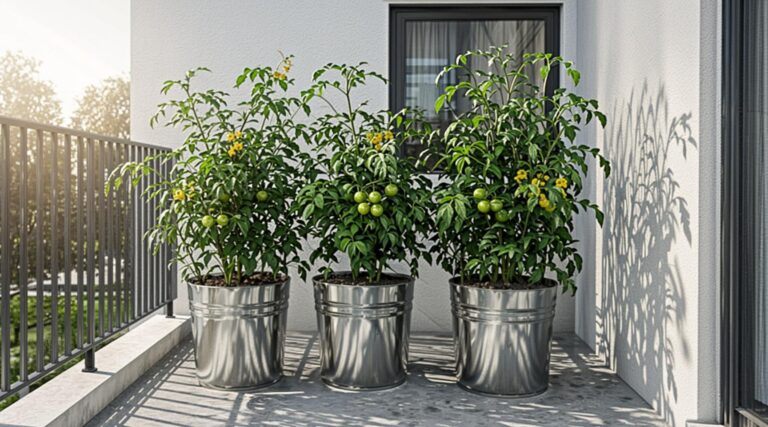
If this approach appeals to you, it connects naturally with the container growing techniques covered in how to grow tomatoes in a five-gallon bucket on a balcony — the same lightweight, low-cost container principles apply to celery and lettuce.
How Regrowing Fits Into a Wider Kitchen Savings System
Water regrowth is one part of a broader habit of getting more from your grocery spend. The natural next step beyond regrowing is learning to save seeds from the vegetables you buy — which extends the same principle from scraps to seeds, and from a few weeks of regrowth to years of free planting. There’s a practical guide to harvesting and propagating seeds from grocery store vegetables that covers exactly how to do this for tomatoes, peppers, and more.
On the food planning side, one of the best uses of free AI tools is turning leftover produce — including the regrown bits you’ve harvested — into actual meal plans. If you haven’t tried this yet, using free AI prompts to plan meals from fridge scraps is a genuinely useful read that works well alongside the regrowth habit.
And if you want to expand from a water dish to a proper indoor growing setup, the windowsill grocery shelf guide shows how to build a small but productive growing space without any specialist equipment.
FAQ
Q: How long does it take for celery to regrow in water? A: Most people see the first small yellow-green shoots appearing from the centre of the stump within five to seven days. Usable stalks and leaves — ones you can actually harvest and eat — typically take two to three weeks. Warmer kitchens and better light speed this up; cold, dark spots slow it down noticeably.
Q: Can I regrow supermarket vegetables that have been in the fridge for a week? A: Yes, in most cases. The vegetable is still biologically alive even after several days in a refrigerator. You may find that regrowth starts slightly more slowly from very cold produce, but once the stump has been at room temperature for a few hours, it responds as normal. Very old, wilted produce that has lost significant moisture may not regrow well.
Q: Do I need to add anything to the water — plant food, sugar, anything? A: No. Plain water is all that’s needed for the initial regrowth stage. Adding fertiliser or sugar to the water is not only unnecessary at this stage but can actually promote bacterial growth that rots the stump before roots form. Keep it simple: clean, room-temperature water changed every couple of days.
Q: Why has my celery regrown leaves but not proper stalks? A: Several things can cause this. The most common is insufficient light — the plant is producing leaves but doesn’t have enough energy to build full stalks. Move it to a brighter position. The second most common cause is leaving it in water too long without transplanting into soil — water lacks the nutrients needed for thick stalk development. If you want full stalks, the transition to compost is necessary.
Q: Is it safe to eat vegetables regrown in tap water? A: Yes, provided you keep the water clean. The key safety practices are changing the water every one to two days (daily in warm weather), discarding any growth where the base has become slimy or the water has turned cloudy and unpleasant, and washing regrown leaves under cold running water before eating. Normal food hygiene applies — regrown vegetables are food like any other and should be treated as such.
Written by Sharjeel — Founder, informix.today
Last Updated: May 2026
Disclaimer: This article is for informational purposes only and does not constitute professional financial or legal advice. Always test DIY hacks safely.