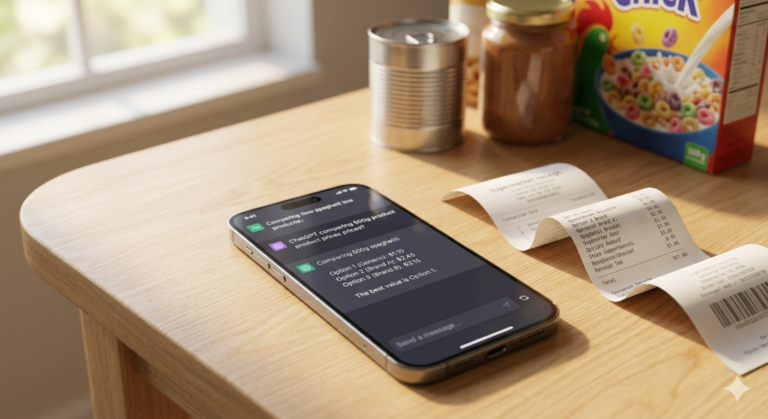
The Free AI Prompt That Writes Your Energy-Saving Morning Routine From Your Utility Bill
The fastest way to make free AI useful here is to give it your utility bill, your season, and your actual morning schedule, then ask for a routine that targets the biggest energy waste in your home. That matters because the Department of Energy says heating and cooling usually take the largest share of a home utility bill, and it also says many energy-saving actions are free or low-cost.
The second step is to make the AI work from real household data instead of vague goals. OpenAI’s prompt guidance says clear, specific prompts with enough context produce better results, and the free tier can now search, analyze files, and handle image/file uploads with usage limits. That means a bill photo, PDF, or pasted bill details can be enough to start.
Why this works better than generic “save energy” advice
A lot of energy advice sounds good but does not fit a real morning. Your family is rushing, the house may be warming up or cooling down, and no one wants a checklist that takes twenty minutes to follow. The point of using AI is to turn your bill into a short, usable routine that matches your home instead of a generic list from the internet.
That is also why the utility bill matters so much. DOE says to start by looking at your bill, and it explains that bills can be detailed and confusing, with charges that are not always obvious at first glance. If your utility offers Green Button access, you may also be able to download detailed energy data in a standard, computer-friendly format.
The free AI prompt to use
Paste this into a free AI chat and replace the bracketed parts with your own details:
Act like my household energy coach.

Use the utility bill details I share below to build a realistic morning routine that lowers energy waste.
Focus on the biggest energy costs first.
Keep the routine under 10 minutes.
Make it easy for a busy household to follow.

Home details:
- Household size: [insert]
- Season: [summer / winter / spring / fall]
- Heating and cooling: [AC, furnace, radiator, heat pump, fans]
- Usual wake-up time: [insert]
- Rooms used first in the morning: [insert]
- Anything I already know is wasting energy: [insert]

Bill details:
- Monthly total: [insert]
- Kilowatt-hours used: [insert if known]
- Peak cost areas or notes: [insert]
- Any unusual charges: [insert]

What I want:
1. A 5-step morning routine
2. A version for hot weather and a version for cold weather
3. One habit that gives the biggest savings
4. One habit that is nice to have but not necessary
5. A short explanation of why each step matters
6. A final checklist I can follow every morning

Do not give vague advice.
Do not recommend expensive devices unless they are clearly worth it.
If the bill information is not enough, ask me for the missing details first.
That prompt follows OpenAI’s best-practice advice: be clear, specific, and detailed; put the task up front; and separate context from instructions. OpenAI also recommends iterating when the first answer is not quite right, which is exactly what you should do if the routine feels too long or too generic.
How to turn the AI answer into a real morning routine
Once the AI gives you a draft, do not use it as-is. Trim it down to the handful of actions that actually fit your house.
A strong morning routine usually includes three things: a thermostat check, a window or shade check, and one quick look at devices or appliances that are wasting power. In warm weather, DOE recommends using window coverings to block heat, operating the thermostat efficiently, and using fans correctly. It also reminds you that fans cool people, not rooms, so they should not be left running when nobody is there.
In colder weather, DOE recommends the opposite window habit: use sunlight to your advantage during the day and close coverings at night to reduce heat loss. That makes the same AI prompt useful in both seasons, as long as you tell it which season it is writing for.
A good routine might look like this:
- check the thermostat setting
- open or close blinds based on the season
- run the bathroom fan after showers if moisture is building up
- make sure vents and registers are not blocked
- switch off unnecessary lights and electronics before leaving a room
DOE says heating and cooling make up a large share of home utility bills, and it also recommends regular maintenance for cooling equipment and keeping air paths clear. Those small checks matter more than most people think because they happen every day.
Cost-Saving Reality
The biggest savings do not come from a clever prompt alone. They come from using the prompt to spot one or two habits that repeat every morning and waste power all month long.
DOE says lowering energy use saves money, and it also says reducing loads is the first step before investing in larger upgrades. It further notes that appliances and electronics can waste power through standby use, and that advanced power strips can help reduce those “vampire loads.”
That is why a bill-based morning routine is useful. It helps you focus on the habits that happen every day, like thermostat choices, window coverings, and whether a device is needlessly left on. It is a small routine, but repeated daily, it can matter a lot more than one off weekend fix.
Common Mistakes to Avoid
The most common mistake is asking AI for “energy-saving tips” without sharing the bill, the season, or the way your household actually gets ready in the morning. OpenAI says vague prompts lead to weaker answers, because the model has less context to work with.
The second mistake is trying to make one routine work all year. DOE’s advice changes with the season because the home behaves differently in summer and winter. A routine that helps keep heat out in July can be the wrong thing to do in January.
The third mistake is chasing complicated tools too soon. DOE gives plenty of free or low-cost options first: thermostat discipline, window coverings, ventilation strategy, maintenance, and smarter use of appliances. That is the right place to start before buying new gear.
Myth vs Reality
Myth: The AI will know what wastes energy in my house.
Reality: It only knows what you tell it. The bill, season, household size, and morning habits are what make the routine useful.
Myth: If I turn the thermostat colder or hotter fast enough, the home will reach comfort faster.
Reality: DOE says setting it more extreme does not cool your home faster and can waste money.
Myth: Fans save energy just by being on.
Reality: DOE says fans cool people, not rooms, so they are useful when someone is present and should be turned off when not needed.
Myth: Only expensive upgrades matter.
Reality: DOE repeatedly points to free and inexpensive habits first, and it says reducing electricity use saves money right away.
Advanced section: turn one bill into a monthly energy system
Once the basic routine is working, reuse the same prompt every month. Keep one master version with your home details, then update only the current bill and the season. OpenAI’s prompt guidance recommends structured instructions and iterative refinement, which makes this kind of reusable template a better fit than starting from scratch each time.
If your utility supports Green Button data, that can make the workflow even stronger because you can download detailed energy information in a standardized format and feed the trends back into your AI prompt. DOE describes Green Button as a secure way for customers to access their own energy usage data in a consumer- and computer-friendly format.
A strong monthly system looks like this:
- compare this month’s bill to last month’s
- ask AI what changed
- keep one habit that worked
- remove one habit that did not
- update the prompt for the next season
That approach turns free AI into a simple energy coach instead of a one-time gimmick. It is also easier for families to stick with because the routine stays short and familiar.
How to keep it realistic for a busy household
The best morning routine is the one that can survive a school run, a work shift, or a chaotic Monday. That means the AI should not be asked for perfection. It should be asked for the few highest-impact actions that are easy to repeat.
If the answer gives you too much detail, cut it down. If it gives you only generic advice, add more bill information or ask for a winter and summer version separately. OpenAI explicitly encourages iterative refinement, which is exactly how you make the routine fit real life.
A related read on Informix Today
If you are also trying to reduce everyday electricity waste, the refrigerator and window-sealing guides fit naturally with this routine because they focus on the same practical habit: stop the easy losses first. See refrigerator maintenance to lower power draw, the $1 fridge seal test, and the bubble-wrap window insulation trick.
FAQ
1) Can free AI really write a useful energy-saving routine from my bill?
Yes, as long as you give it enough context. OpenAI says clear, specific prompts work better, and the free tier now supports file and image uploads with usage limits.
2) What bill details should I share with the AI first?
Start with the monthly total, usage if you have it, the season, and anything unusual in the bill. DOE says to begin by looking at your utility bill, and it explains that bills can include charges that are not immediately obvious.
3) Should I make one routine for summer and winter?
No. DOE’s seasonal tips are different for hot and cold weather, so the best routine should change with the season.
4) What is the biggest energy habit to focus on first?
In many homes, heating and cooling are the biggest energy expense, so thermostat settings, window coverings, and air-flow habits are the first place to look. DOE says heating and cooling typically make up about 43% of a home utility bill.
5) Do I need smart home gadgets to do this?
No. DOE’s advice includes many free actions, such as adjusting thermostat use, blocking heat with window coverings, using fans correctly, and keeping vents clear.
Written by Sharjeel — Founder, informix.today
Last Updated: May 2026
Disclaimer: This article is for informational purposes only and does not constitute professional financial or legal advice. Always test DIY hacks safely.